

Category "BLOG"

Parental Monitoring: A Protective Factor Against Adolescent Substance Use.

September 21, 2023

Parental Monitoring: A Protective Factor Against Adolescent Substance Use.

Parental Monitoring describes the extent to which a parent supervises the activities of their adolescent and the level of concern and awareness they demonstrate to their adolescent regarding those activities.
And yes, research shows that adolescents whose parents practice effective monitoring strategies are, not only, less likely to use substances, they are less likely to choose risky behaviors in general.

The CDC (Centers for Disease Control and Prevention) has compiled a list of suggestions for parents to use to monitor their adolescent and help protect them from risky behaviors and experiences:

  • Talk with your teen about your rules and expectations and explain the consequences for breaking the rules.
  • Talk and listen to your teen often about how they feel and what they are thinking.
  • Know who your teen’s friends are.
  • Talk with your teen about the plans they have with friends, what they are doing after school, and where they will be going.
  • Set expectations for when your teen will come home and expect a call if they are going to be late.
  • Ask whether an adult will be present when your teen is visiting a friend’s home.
  • Get to know your teen’s boyfriend or girlfriend.
  • Get to know the parents of your teen’s friends.
  • Talk with your relatives, your neighbors, your teen’s teachers, and other adults who know your teen. Ask them to share what they observe about your teen’s behaviors, moods, or friends.
  • Watch how your teen spends money.
  • Keep track of how your teen spends time online and talk about using the Internet safely.
  • Pay attention to your teen’s mood and behavior at home and discuss any concerns you might have.
  • If your teen does break a rule, enforce the consequences fairly and consistently.
  • Make sure your teen knows how to contact you at all times

The Legacy of Dr. J

September 6, 2023

The Legacy of Dr. J

Passionate. Dedicated. Selfless. These are just a few words to describe our late founding Medical Director, Dr. John G. Johnston, lovingly known as “Dr. J.” The light he brought to the practice and to those in his presence is one that many will never forget. During his life, he inspired teens, their parents, and medical students to be the best version of themselves.

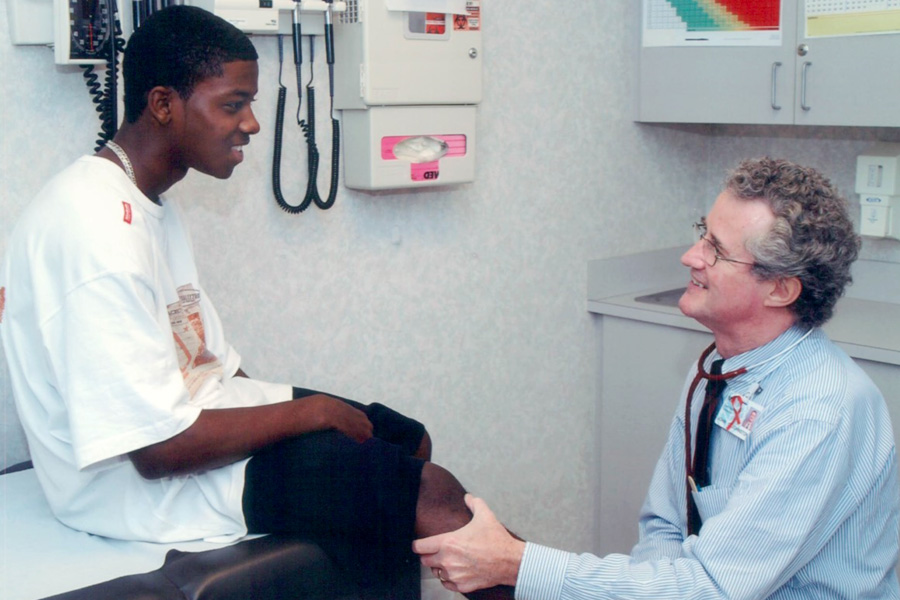
After leaving Charlotte Pediatric Clinic, where he served the community for 18 years, Dr. J came to serve as Teen Health Connection’s first Medical Director in 1992.  While serving as the Medical Director, he always wanted to make sure each patient left feeling positive and that he would always be a listening ear. He was loved by all and would never shy away from spending as much time as needed with each patient. He loved to hear about their experiences and wanted them to know that Teen Health Connection would always be there.

Even after his retirement in 2005, his love and passion for Teen Health Connection continued and is still felt today.  To have this legacy of Dr. J felt by all and to invest in the future of teens, Teen Health Connection’s Board of Directors created the Johnston Ziegler Youth Leadership Scholarship.  The Johnston Ziegler Youth Leadership Award is a merit-based scholarship that recognizes a local high-school senior who, like Dr. Johnston and Barbara Ziegler, has demonstrated outstanding leadership, advocacy, or service for adolescents. The selected youth will receive a $2,500 educational scholarship to the college or university of his or her choice.

Though Dr. J may no longer be with us, his vision, passion, and dedication live on with each of us here at Teen Health Connection and within those who knew Dr. J. As we mourn his loss, let us remember the smiles he brought to everyone when he entered a room and the passion he brought to helping the Charlotte community.

Animal Assisted Therapy at Teen Health Connection

August 24, 2023

Animal Assisted Therapy at Teen Health Connection

We would like to welcome our new furry colleague, Pixie, to our Teen Health Connection team. Pixie is a four-year-old Great Dane and is a Therapy Dog certified through Therapy Dog International.

With teens coming from many areas of life, it can sometimes be challenging to open up, especially to those they do not know very well. Because of this, animals can be used as a fantastic way to ease the tension in the room and provide a way for a patient to feel more comfortable.

Animal Assisted Therapy (AAT) is a form of creative therapy that utilizes licensed and credentialed therapy animals in a therapeutic setting. Animal Assisted Therapy can be used with several types of psychological, emotional, developmental, cognitive behavioral, and physical health situations. Numerous studies show that interaction with animals helps people lower their blood pressure, increases engagement, and reduces anxiety and depression.

For most people, the presence of an animal prompts the body to release serotonin, prolactin, and oxytocin. These hormones generate a relaxation and stress-reducing response. Over time, these “happy hormones” lower anxiety and, can “break the ice” between therapist and patient. Interacting with a therapy dog has also been shown to lower cortisol (stress hormone) and reduce blood pressure.

Pixie works alongside her pet parent and Teen Health Connection therapist, Clark Bridge, LCSW. Though still early in her AAT career, we can see that Pixie is really enjoying all the pets she receives when coming to work, even though she has been caught sneaking in a few snoozes during her breaks. Patients are really enjoying their sessions with Pixie, and even other patients who see other providers cannot help but want a few minutes to pet Pixie. We look forward to expanding Pixie’s potential at Teen Health Connection.

Why is Sleep Important for Teens?

August 15, 2023

September is Suicide Prevention Month

Parents: DID YOU KNOW?

A 2014 study found that sleep-deprived teens are more likely to report anxiety, depression, and suicidal thoughts and behaviors.

Quality sleep promotes mental, physical, social, and emotional development in teens, but many teens aren’t getting the recommended 8 to 10 hours of sleep a night. In fact, biologically speaking, a teen’s internal body clock is at odds with this 8-to-10-hour goal. There is a sleep cycle shift during puberty that impacts the two main biological processes that cause us to sleep: (1) teens’ sleep hormone production shifts to later and (2) the pressure to sleep accumulates more slowly, so teens don’t feel sleepy until later. Of course, there are other factors that contribute to a teen’s lack of sleep: (3) overscheduled lives, (4) use of electronics, and (5) mental health conditions like anxiety and depression can all make getting sufficient sleep challenging.

Here are some healthy sleep tips for teens, that can make getting more sleep and better sleep a reality:

  1. Create a consistent bedtime routine that helps you relax and fall asleep more easily.
  2. Avoid caffeine and energy drinks a minimum of 8 hours before bedtime.
  3. Avoid using screens at least 30 minutes before bed. If possible, leave screens in a common room to charge.
  4. Respect the bed. Don’t do homework, play games, or eat. Only sleep in your bed.
  5. Keep your bedroom cool, dark, and quiet.

August is the time to start preparing for a new school year

July 26, 2023

August is the time to start preparing for a new school year.

August is the time to start preparing for a new school year. But before you dive headfirst into schedules and routines, here are some fun things to do with your teenager to help end the summer on a high note:

  1. Spend time in or on the water. Go canoeing or kayaking, bodyboarding, or rafting and if you are less adventurous, spend one on one time with your teen at the neighborhood pool or waterpark.
  2. Have a movie marathon. You can even choose a theme. Harry Potter or Harrison Ford. Have a lazy, chore-free, homework-free day.
  3. Visit a driving range.
  4. Tour a local college or a college or university of their choice. This is a terrific way to make your teen feel special.
  5. Take a cooking class with your teen. This can be fun but productive as well. The more confident your teen feels in the kitchen, the more likely they are to help with dinner.
  6. Go to a concert together. Try to find a performer you both enjoy.
  7. Volunteer together. Choose a cause that is meaningful to you both.
  8. Try a new restaurant together. Be adventurous and try something neither of you have tried before but you’ve both wanted to.
  9. Tie-dye a t-shirt. This can be messy but fun.
  10. Challenge your teen to a thrift store war. Both of you take the same amount of money and at the end of your shopping spree, decide who found the best buys. Allow outside votes for this one if you feel so inclined.

Whatever you do, remember to enjoy the last lazy days of summer. There will be plenty of time for structure and routine in September, but in the meantime, ENJOY each other’s company. Your teenager will not be a teenager forever.

What is a Sports Physical?

July 24, 2023

What is a Sports Physical?

  • It is an exam completed by a physician to determine if it is safe for an individual to participate in a sport and is comprised of two parts:
    • Medical History
    • Physical Exam

Medical History

  • Medical history is typically done by completing a form to answer questions regarding:
    • Any hereditary medical problems
    • Allergies
    • If there have been any recent hospitalizations
    • If the person receiving the sports physical has any medical problems such as:
      • Asthma
      • Diabetes
      • Dizziness, chest pain, or trouble breathing while exerting energy while exercising.
    • It is important to be sure the information on the form is as accurate as possible and to help your teen complete the form if they are having trouble.

Physical Exam

  • For the physical exam, the doctor will typically do the following:
    • Check heart, lungs, pulse, and blood pressure
    • Record height and weight
    • Complete a vision test
    • Check muscles, bones, and joints

Why is a Sports Physical Important?

  • A sports physical can help find any health problems that may inhibit one’s ability to safely play a sport in terms of performance and risk of injury. If any problems are found, a doctor can work together with you and your teen on skills or tips for how to play safely and effectively.