



Suicide is the…
- 12th leading cause of death in North Carolina
- 2nd leading cause of death for ages 15-25
- 4 in 10 high school students experience persistent feelings of sadness or hopelessness.
- 2 in 10 high school students seriously considered attempting suicide.
- 1 in 10 high school students attempted suicide.
afsp.org/statistics
Why is raising awareness so important?
- Suicide impacts ALL populations of youth and adults.
- Being open to talking about suicide means someone might talk to you when needed.
- Knowing what action to take can save a life – yours or someone else’s.
- Asking for help is hard – talking about it and having options makes it easier.
When you’re aware, you can help
Is it safe to ask teens directly if they are having thoughts of suicide?
YES – It is safe to ask teens if they are having thoughts of suicide. One of the most common myths about asking youth about suicide is that it will “put the idea into their heads.”
Multiple research studies have established that it is safe to ask young people about suicide. Asking directly about suicidal thoughts is important, as many youth will not raise the topic on their own. Most young people keep suicidal thoughts to themselves and may not bring up the topic on their own if they aren’t asked a direct question.
If you’re talking to teens, ensure your questions are asked in a non-judgmental way and follow it with questions that help build a personal connection. Allowing a young person to discuss their thoughts of suicide makes it safe to talk and may bring them relief.
Remember to get help from a clinician.
HOW TO START A CONVERSATION
- Talk to them in private
- Listen to their story
- Tell them you care about them
- Ask directly if they are thinking about suicide
- Encourage them to seek treatment or to contact their doctor or therapist
- Avoid debating the value of life, minimizing their problems, or giving advice
Simple Steps to Asking about Suicide:
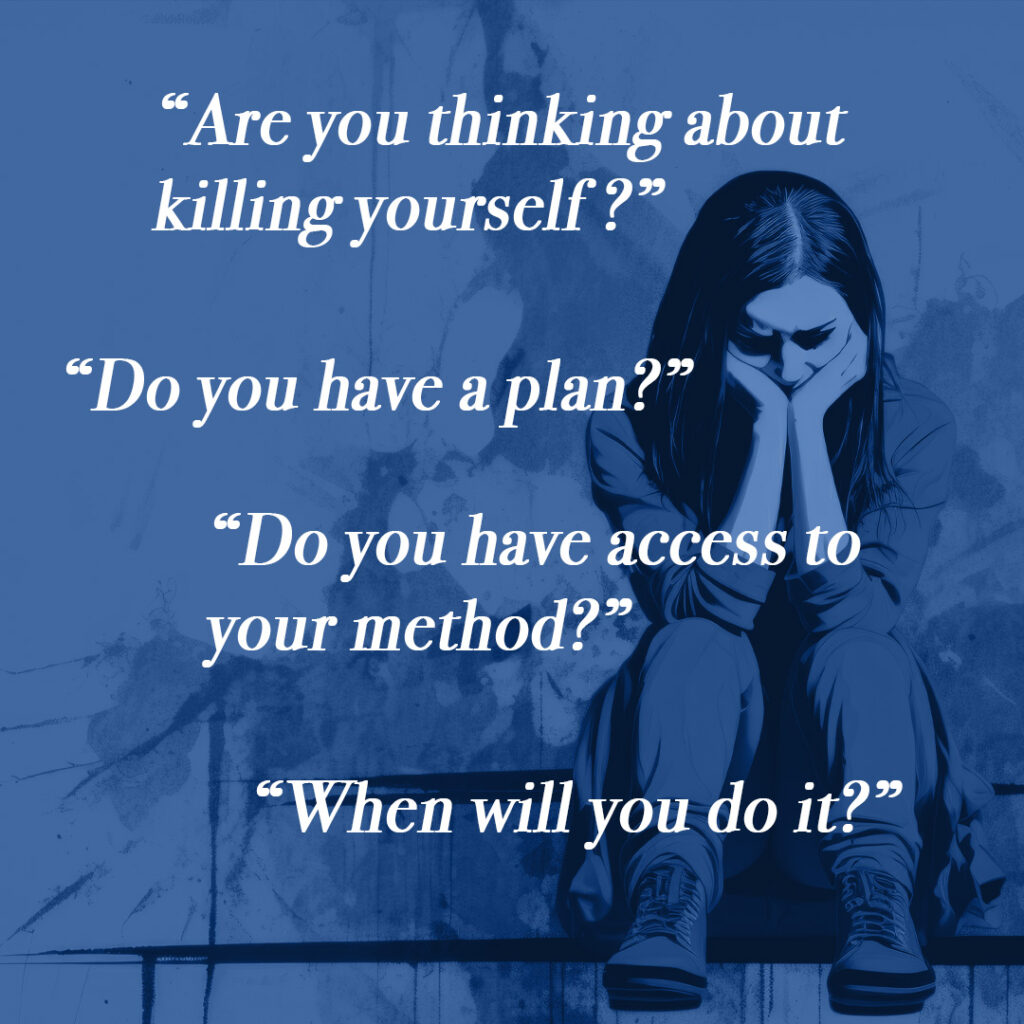
If you feel that the threat is imminent, do not leave the person alone. A suicidal person must see a doctor or psychiatrist immediately. You may have to take them to the nearest hospital emergency room or call 9-8-8 or 9-1-1.
IF SOMEONE SAYS THEY ARE CONSIDERING SUICIDE
- Take them seriously.
- Reassure. Help is available, and suicidal feelings can be managed. There is medical help to treat depression and other illnesses that cause suicidal feelings.
- Get Help. Don’t worry about breaking a promise or harming a relationship at this point. Friendships and relationships can be fixed.
- Stay with them. If you feel the person isn’t in immediate danger, you can say things like, “I understand that you are in pain, and that you want the pain to stop”, and “I care about you and will do my best to help you.”
- Follow through. Help find a doctor or a mental health professional. Be by the person’s side when that first phone call is made, or go along on the first appointment.
- Help them remove lethal means. This includes access to firearms, weapons, and prescription and non-prescription medications.
- Contact the National Suicide Prevention Lifeline by calling or texting 9-8-8 or by visiting 988LifeLine.org
- Escort them to mental health services or an emergency room
- Follow up. Check in. Even if you already talk regularly, have direct conversations about how they are doing, and if they still think about suicide.
If you or someone you know is struggling with suicidal thoughts, please seek help immediately.
Contact the National Suicide Prevention Lifeline by calling or texting 9-8-8 or by visiting 988LifeLine.org.
KNOW THE RISK FACTORS
- Behavioral health disorders
- Alcohol and other substance use
- Hopelessness
- Impulsive and/or aggressive tendencies
- History of trauma or abuse
- Major physical illnesses
- Previous suicide attempts
- Family history of suicide
- Loss of relationship(s)
- Easy access to lethal means
- Local clusters of suicide
- Lack of social support
- Stigma associated with asking for help
Exposure to suicide in real life or through the media
Risk factors make it more likely that someone will consider, attempt, or die by suicide. They don’t cause or predict a suicide attempt but are important to be aware of.
KNOW THE WARNING SIGNS
- Talking about wanting to die or to kill themselves
- Looking for a way to kill themselves, like searching online or buying a gun
- Talking about feeling hopeless or having no reason to live
- Talking about feeling trapped or in unbearable pain
- Talking about being a burden to others
- Increasing the use of alcohol or drugs
- Acting anxious or agitated; behaving recklessly
- Sleeping too little or too much
- Withdrawing or isolating themselves
- Showing rage or talking about seeking revenge
- Extreme mood swings
Some warning signs may help you determine if a loved one is at risk for suicide, especially if the behavior is new, has increased, or seems related to a painful event, loss, or change.